
Its brown-speckled coloration is distinguished by the blue bands around its tentacles which give it its name. This small animal can be very dangerous, but it gives a warning signal in advance. When the bands around the tentacles glow blue, poison is about to be released. The blue-ringed octopus almost never bothers humans unless provoked, but since it is so small, many people think it is harmless. No more than six inches across, this venomous sea creature has a true octopus shape.
Case Study: In 1967, a young soldier held an octopus on the back of his hand for a minute or two and had no sensation of a bite. But after putting the creature down, he noticed blood on his hand. Just a few minutes later he felt a prickling sensation around his mouth, which rapidly spread over his whole body. Within just fifteen minutes, he was almost completely paralyzed and barely able to breathe. After an hour, this healthy young sailor began to vomit and soon went into convulsions. One hour after the bite, he was taken to the hospital, still breathing, fully conscious but completely paralyzed with no muscle tone and no reflexes. He couldn’t even talk. In another hour, stopped breathing and was put on a heart-lung machine. Miraculously, he eventually survived the ordeal.
Friday, September 11, 2009
Blue-Ringed Octopus
 more

Bivalve shellfish

Location: Bi-valve shellfish, such as mussels, clams, oysters, scallops, cockles, and other shellfish that naturally have two hinged shells thrive in many US marine locations such as New England, the Pacific Coast, and Alaska, as well as the Mexican and Canadian coasts. They can become poisonous during warm seasons when they feed on certain dinoflagellates, microscopic cellular beings, as Gony-aulax catenella, which carry potent nerve poisons.
Effects and Symptoms: A nitrogenous compound in the shellfish produces curarelike muscular paralysis. After ingesting infested bi-valves, numbness, tingling of lips, tongue, face, and extremities can occur; followed by nausea, vomiting and sometimes even convulsions. Symptoms can often progress to respiratory paralysis and death. The symptoms start within a half hour of ingestion. Recovery is likely if the victim survives the first twelve hours. Fatalities occur in approximately ten percent of all cases.
Government agencies sometimes issue warnings advising people not to eat particular shellfish during certain times of the year. The mortality rate of those consuming toxic shellfish is sometimes quite high, with mussels producing the highest death rate of all the bivalve shellfish.
Amanitas – Destroying Angel
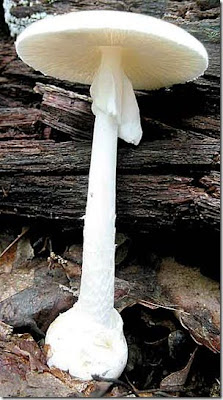
Location: Europe and in the United States.
In Europe, the blossoms vary in color from pale-green or yellow-olive and along both the east and west coasts in the United States. However, they range from white to light brown in the rest of the United States.
Amanitin can be detected in the blood almost immediately. The first physical symptoms are usually nausea, vomiting, and bloody diarrhea. After an early feeling of slight discomfort, there is a sudden onset of extreme stomach pain, violent vomiting, intense thirst, and cyanosis of the extremities. Jaundice of the eyes and skin can also occur if the liver is badly affected. The patient remains conscious almost to the end, with only brief intervals of unconsciousness occurring between long lucid periods before lapsing into a coma followed by death.
Antidotes and Treatments: There are no known antidotes for Amanita poisoning; however, victims have survived after receiving liver transplants.
Copyright © 2009


